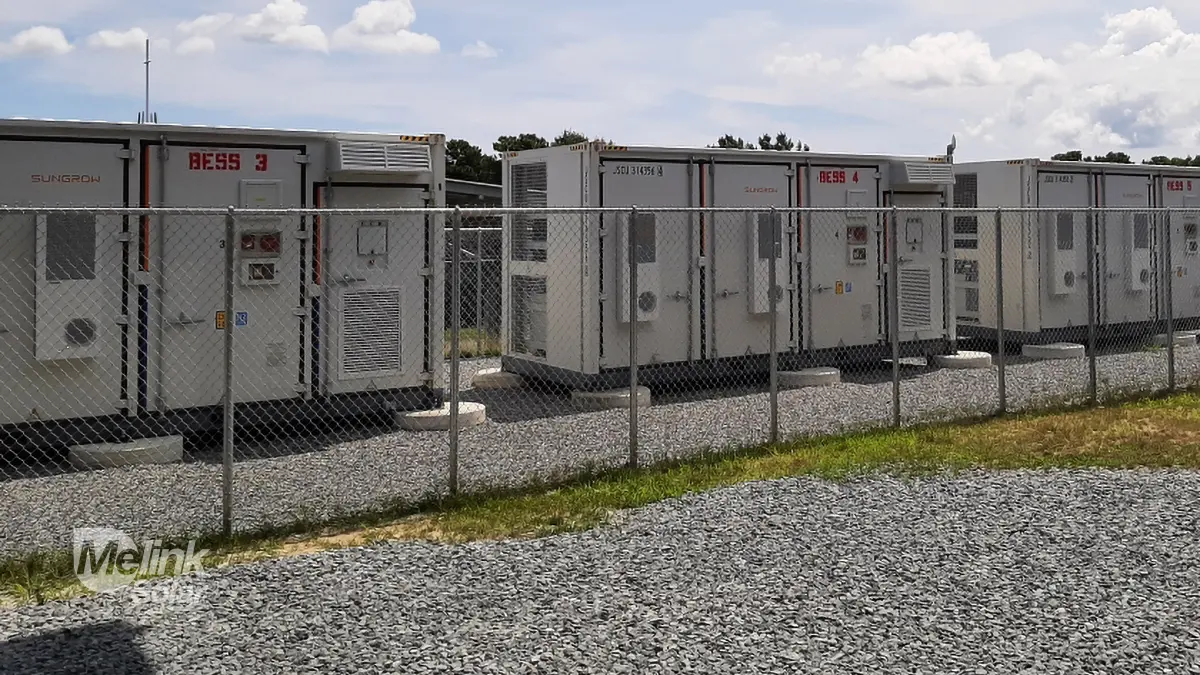
Battery storage systems, often referred to as Battery Energy Storage Systems (BESS), combined with commercial solar installations, enable organizations to store excess energy generated during the day for use at night or during peak demand hours. When evaluating battery storage solutions, it’s important to consider factors like energy needs, peak usage times, available space, and the existing solar setup (whether it’s rooftop, ground-mounted, or canopy solar).
Melink Solar is honored to share that we have once again been named a finalist for the Cincinnati Business Courier’s Best Places to Work awards. This marks the second consecutive year our company has been recognized among Greater Cincinnati’s most outstanding workplaces.
As energy costs continue to rise and sustainability becomes more critical to business operations, many companies are exploring renewable energy solutions. Solar energy, in particular, has become an increasingly attractive option for businesses of all sizes. What might surprise you, however, is just how many financial benefits come with adopting solar energy for your business.
If you’re a decision-maker at a commercial or industrial business, there’s a good chance solar energy has crossed your mind. Rising energy costs, sustainability pressures, and future-proofing operations make solar compelling. But the key question remains: “What government incentives make this investment viable?”.
Commercial electric bills can be complex documents, filled with industry-specific terminology and multiple charge categories. Yet understanding these details is essential for controlling operational expenses, identifying saving opportunities, and making informed decisions about renewable energy investments like solar power.
In today’s business landscape, managing operational costs is key to staying competitive, and utility rates are becoming an increasingly unpredictable part of that equation. As a decision-maker—whether you’re a CEO, CFO, COO, or Facilities Manager—it’s essential to understand how volatile electricity pricing can impact your company’s financial health.
As Generation Z enters adulthood, their influence over politics and consumerism is growing. Gen Z is the generation born roughly between 1997 and 2012, meaning that roughly all of Gen Z will be legal adults by 2030 and will make up a large portion of the consumer base and workforce.
The Inflation Reduction Act implemented by the Biden-Harris administration includes clean energy tax credits for federal income tax-exempt and government entities for the first time. Elective Pay (also called Direct Pay) comes in the form of tax-free cash payments from the IRS once clean energy tax credits are earned.
There are two ways for currents of electricity to flow in a circuit: DC (Direct Current) and AC (Alternating Current). Solar panels produce DC as sunlight is absorbed, with current flowing in only one direction. The electrical grid uses AC to transport electricity, that periodically changes the direction of the flow. Inverters are needed to convert DC to AC for the solar array to tie into the grid or for facilities to use the solar power produced on site.
Melink Solar is featured on the 2021 Top Solar Contractors List and receives Solar Power World’s “Greenest Contractor” Award. Solar Power World magazine’s annual list includes Ohio-based, commercial solar design and build firm.
If you are considering solar for your commercial building, an important concept to understand is net metering, whether it applies in your state, and how it works with your utility company.
Range Anxiety. It’s no surprise that this is a common concern of those who are hesitant in making the switch to electric vehicles (EVs). How can owners of electric cars confidently take a long drive without a plethora of charging stations along the highway? Gas stations are everywhere. Why should EV charging stations be any different?
As businesses attempt to set themselves apart in a world of emerging technologies, those invested in renewable energy continue to outshine competition. Solar power in particular has not only proven to be a profitable investment — it can also serve as a marketing tool to entice customers and employees. Consider a solar canopy covering your business’ parking lot.
Over the last decade, solar photovoltaics (PV) have undergone an average annual growth rate of 49% as the cost of solar has dropped by more than 70%. The market is expected to double in size over the next five years, so how can you receive assurance that solar PV is not only a good investment but also a safe one?
If you are considering solar for your commercial building, an important concept to understand is net metering, whether it applies in your state, and how it works with your utility company.
As devastating as COVID-19 has been, there’s a different lens from which we can view its effect on the world. How can businesses become more resilient? While it’s hard not to focus on just the next few months, it’s important to think about the kind of world we want to live in after this crisis ends.
The growth of solar in the United States continues to be prohibited by tariffs placed on the industry in 2018. However, despite the tariffs, the commercial solar growth forecast is not all doom and gloom.
There are many barriers for property owners who are considering adding commercial solar capabilities to their buildings. Barriers may include installation cost, installation time, debt financing, and structural integrity of the roof. To help combat these obstacles, solar installation providers are trying to find the best ways to reduce hurdles and make commercial solar photovoltaic (PV) more appealing.
Traditional solar modules are designed to capture as much light energy as possible on one side and convert that into electrical power, while any residual light is reflected away. A recent innovation in solar panel technology allows for light to pass through areas in the module and is re-captured on the back side for increased efficiency. These are known as bifacial solar panels. Many of these panels have a slim profile and limited framing dimensions to increase the surface area and collect as much energy as possible.
With innovations such as bifacial solar panels, solar windows, and solar shingles, it is certainly an exciting time for the industry. In today’s fast-paced market, it is important to adapt quickly to consumer demands. These inventions have been made to tackle efficiency and aesthetic concerns associated with traditional solar PV installs. For those who don’t particularly care about the look of their solar system, efficiency is everything. Bifacial modules collect light from the front and back of the panel and can yield an additional 10% in electricity production compared to monofacial modules with concrete or vegetation undercovers, and 30% with a more reflective undercover. Despite our ability to capture both direct and reflected sunlight, we are limited in the efficiency of our PV material used today.
CINCINNATI, OHIO – Melink Corporation has announced a partnership with the University of Dayton to install 4,026 solar panels with a capacity of 1.26 megawatts of power at two of the University’s campus locations; Curran Place and Fitz Hall. Melink Corporation will engineer and construct the arrays, as well as own them and sell the electricity to the University as part of a long-term power purchase agreement. The University has an option to purchase the arrays after eight years.
INDIANAPOLIS, INDIANA – September 15, 2014 – Melink Corporation recently developed and installed the largest rooftop solar PV system in the Midwest on property owned by Equity Industrial Partners Corp. (EIP). The system is estimated to produce more than 4.1 million kWh annually. This system, composed of 12,264 modules on approximately 600,000 square feet of rooftop space, was installed on a new mechanically fastened roof on Rockville road. Power began flowing on August 19, 2014.
A giant solar panel canopy, constructed by Melink Corporation, is exceeding expectations by cutting electricity costs for the Cincinnati Zoo & Botanical Garden. At the same time, 1.5 million visitors each year get an up-close look at clean energy.
INDIANAPOLIS, INDIANA – May 29, 2014 – Melink Corporation recently developed and installed a solar energy system on property owned by Rexnord Industries that is estimated to produce more than 4 million kWh annually. The 3,102 kilowatt solar array, composed of 12,040 collection modules on approximately 13 acres of land, was installed adjacent to the Rexnord manufacturing facility on Rockville Road. Power began flowing on April 9, 2014.